
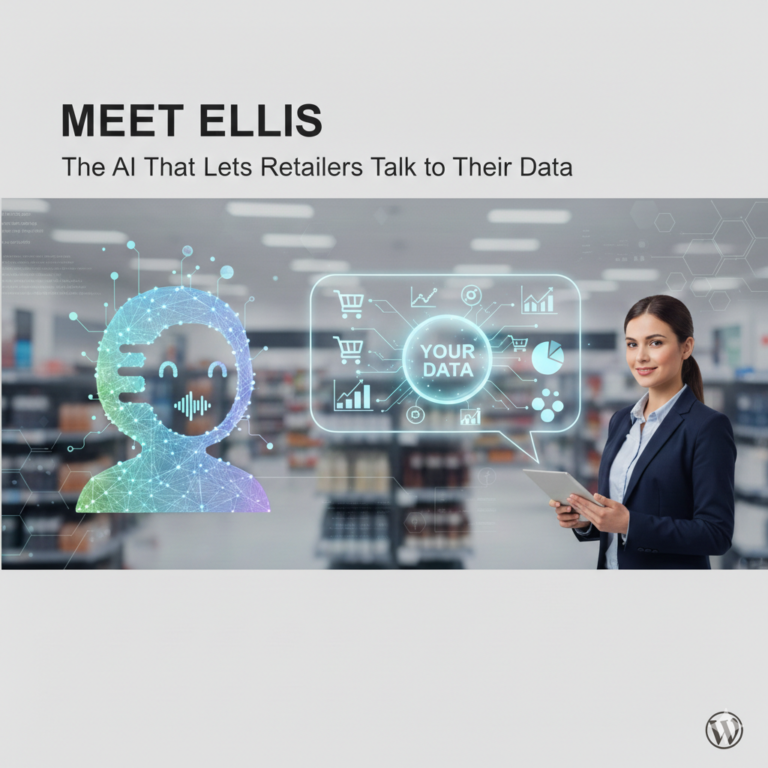
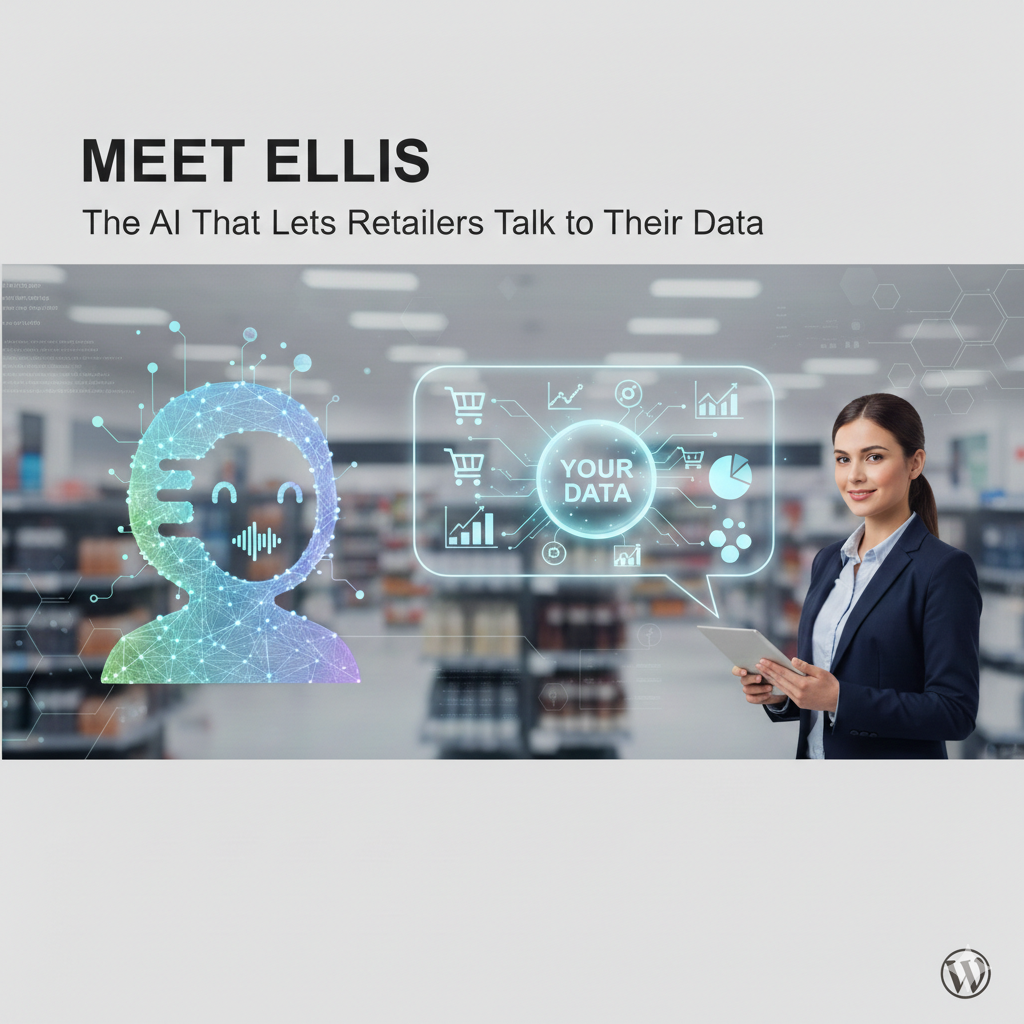
Retailers have been experimenting with AI for years, but the game is changing. Collecting data is not enough. What really matters is turning it into insights you can act on immediately. First Insight, a US-based company that predicts consumer preferences, believes the future of retail AI is not about dashboards full of charts. It is about conversation.
Ellis is their new AI tool. Instead of scrolling through reports, merchandising, pricing, and planning teams can ask Ellis questions in plain English. Which product assortment will sell better? How will a price change affect demand? Ellis delivers answers in minutes using real consumer data to guide decisions.
The idea is simple but powerful. Make consumer insight available the moment it is needed so retailers can act fast, reduce risk, and make smarter decisions every day.
From dashboards to conversation
First Insight already works with retailers like Boden, Family Dollar, and Under Armour. They use survey feedback and predictive models to understand consumer demand, price sensitivity, and product performance. Traditionally, these insights appear on dashboards or in reports, which can take time to review.
Ellis changes that. Teams can ask questions in natural language, and the tool provides instant answers based on existing data. Should a six-item or nine-item assortment launch in a certain market? How will changing materials affect customer appeal? Ellis delivers the answers immediately.
A study from Harvard Business Review shows why this matters. Insight often loses value if it cannot be accessed quickly, especially during critical stages like early concept development or line review.
Predictive insight in action
The methods behind Ellis are already used across retail. Under Armour uses consumer data and predictive modeling to refine product assortments and pricing. This helps reduce markdown risk and boost full-price sales.
Boden also relies on customer insight to balance trend-led items with core staples. While details of these proprietary systems are private, they demonstrate how predictive consumer data can guide real business decisions.
Other big retailers, including Walmart and Target, invest in analytics and machine learning to understand regional demand, optimize pricing, and test new concepts. According to Deloitte, companies that use predictive insight early see better forecast accuracy and lower inventory risk.
Pricing, assortments, and competitive advantage
Ellis is powered by what First Insight calls a predictive retail large language model. It is trained on consumer response data and can answer questions about optimal pricing, predicted sales, ideal assortment sizes, and likely segment preferences.
Research shows this is one of the highest-value uses of AI in retail. A study in the Journal of Retailing found that data-driven pricing models outperform traditional cost-plus approaches, especially when consumer willingness-to-pay is measured directly.
Competitive benchmarking is another area where analytics help. Bain and Company reports that retailers who compare their products with competitors’ are better positioned to differentiate on both value and price. Tools that bring all of this together make decision-making faster and smarter.
Making insight accessible to everyone
One of Ellis’s key advantages is making consumer insight accessible beyond analytics teams. Executives can ask questions directly, without waiting for reports or specialists.
Democratizing analytics is a big trend in industry research. Gartner finds that when more people can access insights, adoption and ROI increase. The key is ensuring outputs are accurate and interpreted correctly.
First Insight says Ellis keeps the rigorous methods of its platform while removing friction at the decision point. Greg Petro, CEO, explains:
“For nearly 20 years, First Insight has helped retailers predict pricing, product success, and assortment decisions using real consumer feedback. Ellis brings that intelligence straight into line review, early concept development, and the boardroom, helping teams move faster without losing confidence.”
A crowded but growing market
First Insight is not alone. Tools from EDITED, DynamicAction, and RetailNext also target merchandising and pricing, but newer offerings focus on speed and usability rather than complex models.
A Forrester report notes that conversational interfaces are now being added to analytics platforms. Users want to interact with data intuitively and quickly. When done well, this improves decision-making, though it relies on high-quality data and disciplined use.
First Insight showcased Ellis at the National Retail Federation conference in New York, where AI-driven merchandising and pricing tools were a major highlight. As retailers face volatile demand, inflation, and changing consumer preferences, tools that allow fast scenario testing are becoming essential.





Heya i aam for the first time here. Ifoun thius board and I to find It truly useful & it helped me out
a lot. I am hoping to present one thing again aand aid others such as you aided me.